Glucose is the last thing to break. Something else moves ten years earlier.
The number your doctor is not measuring For years I could see this one before I had a number for it.
The number your doctor is not measuring
For years I could see this one before I had a number for it.
A man in his forties sits down. He is heavier through the middle than he wants to be, and it is the only place the weight sits. He is tired after eating, properly tired, the kind where he would put his head down if the meeting were not at two. At three in the afternoon he goes flat and reaches for coffee. He sleeps badly and wakes unrefreshed. He is not doing anything obviously wrong.
And his panel comes back fine. Glucose fine. HbA1c fine. Cholesterol acceptable. He is told to lose a bit of weight and get more sleep.
I could read what was happening in him without a marker for it, because the picture is old and the tradition I trained in has been reading it for a very long time. What I could not do, back then, was show it to him on paper. He had a number that said he was fine and a body that said otherwise, and the number wins that argument every time.
Then the right test came onto my desk. And it said, in plain arithmetic, exactly what the room had been saying for twenty years.
What this gives you
Two numbers that show you the problem about a decade before your standard panel does. Both are cheap. One of them you may already have, sitting in a folder, unread.
Here is why you need them.
Glucose is the last thing to break.
Your body has one job it will not negotiate on, and that is keeping blood sugar inside a narrow range. To do that it has a lever, and the lever is insulin. When the system starts struggling to handle what comes in, it does not let glucose drift. It pushes the lever harder. More insulin, same glucose.
That works. It works for years. It can work for a decade.
So a standard panel measures glucose, finds it in range, and reports that everything is fine. What it has actually found is a system holding the line under increasing force. It is measuring the outcome and ignoring the effort. It is like judging an engine by whether the car is still moving, without noticing the revs.
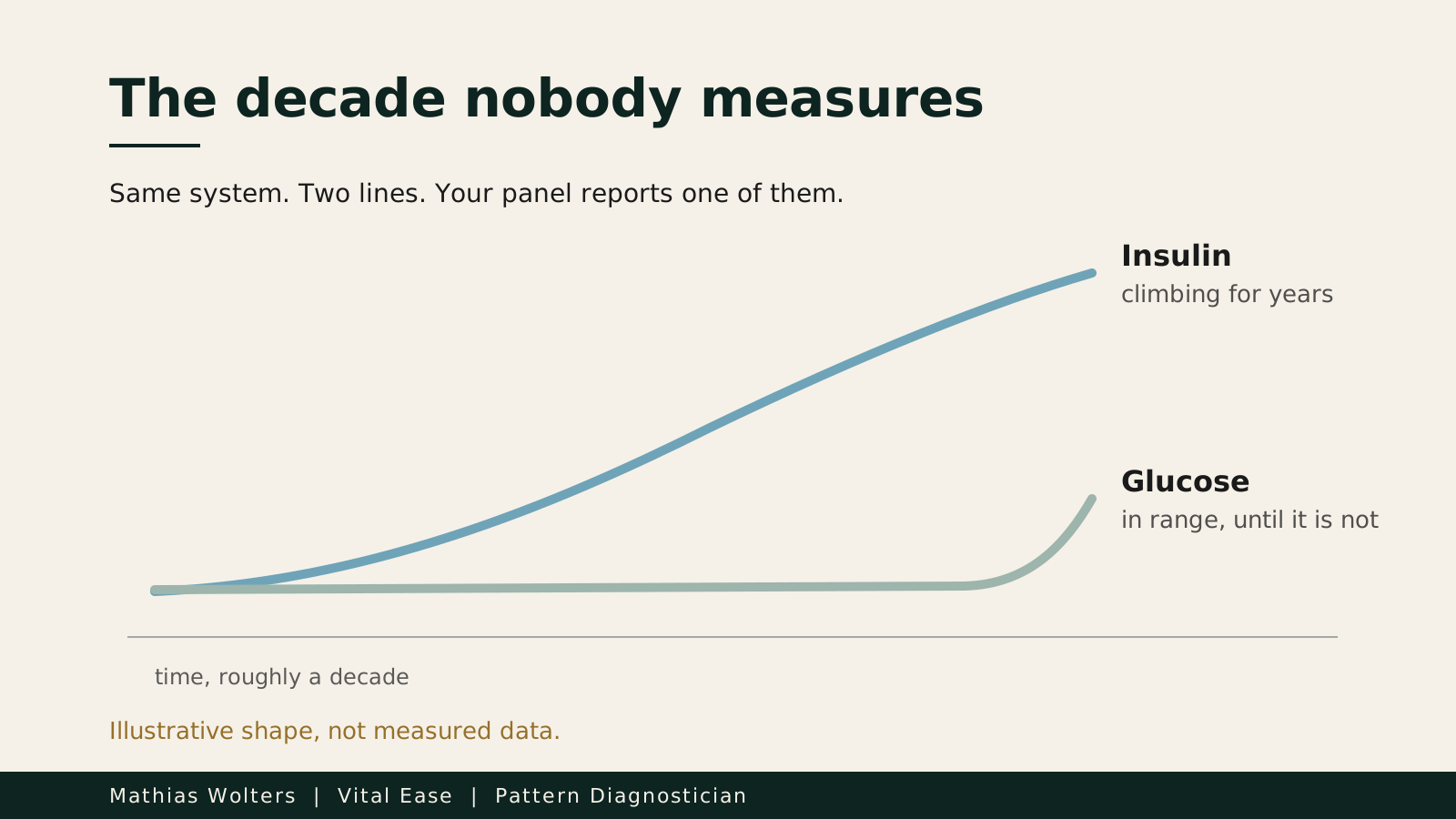
The founder gets told he is fine, every year, until the year he is not. And the day glucose finally moves is not the day the problem started. It is the day the compensation ran out.
The two numbers
Fasting insulin. Almost nobody measures it. It is a standard, inexpensive test and you have to ask for it by name, because it is not in any routine package. Draw it fasted, alongside fasting glucose.
This is the one that reads the effort rather than the outcome. If your glucose is normal and your fasting insulin is high, you have your answer. The line is being held, and you are paying for it.
Together with fasting glucose it gives you HOMA-IR, which is the two multiplied and divided by a constant. Any calculator online will do it. It is the standard research measure of how hard the system is working.
Triglycerides divided by HDL. This one you may already own. Pull out your last lipid panel, find the triglycerides, find the HDL, divide the first by the second. That is it.
That ratio tracks the same thing from a different direction, and it costs you nothing because the blood was already drawn.
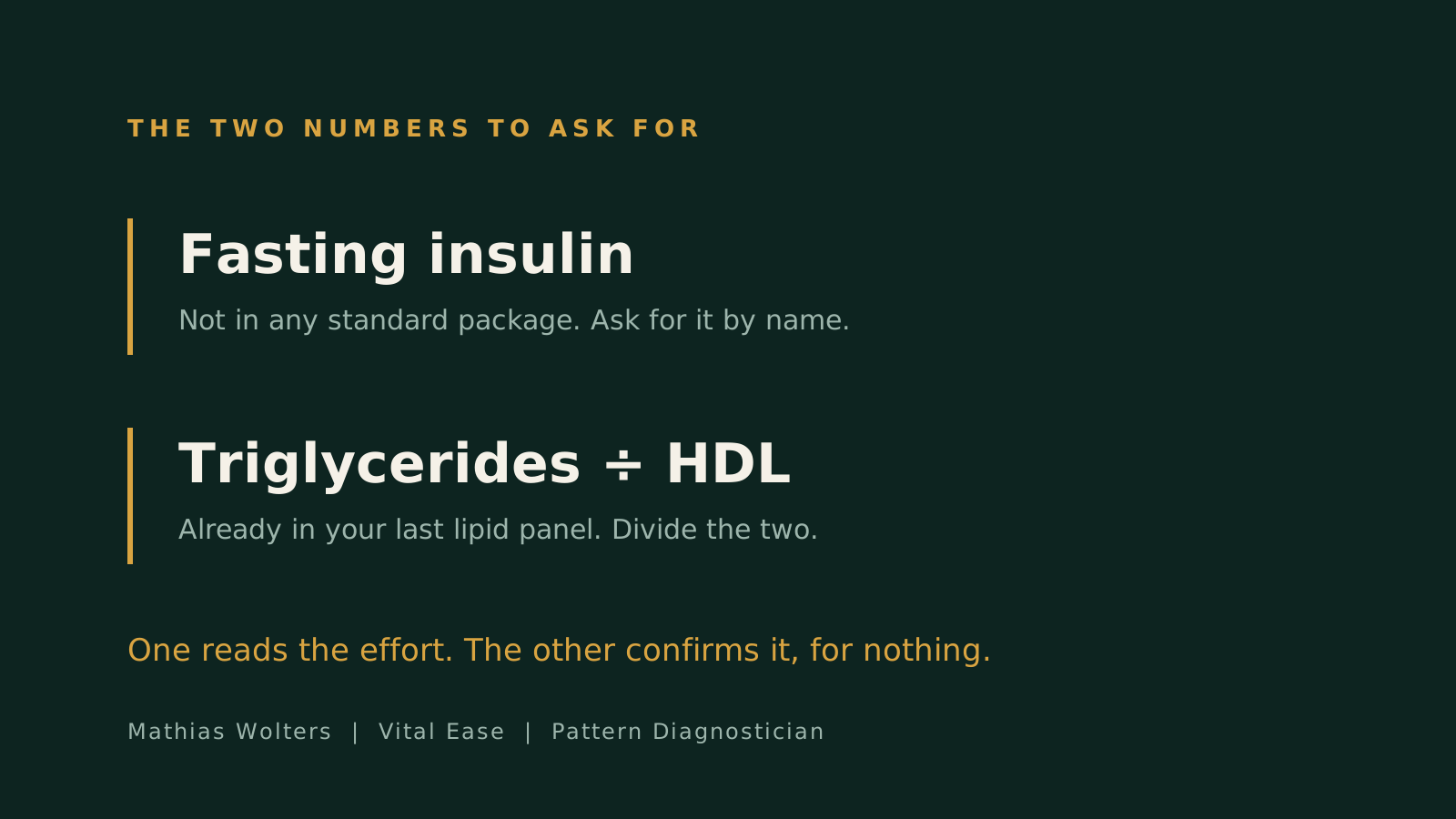
If you do one thing after reading this, it is those two. One you can calculate tonight. One you ask for at your next draw.
What Chinese Medicine is looking at here
Same event, read from the other end.
Food does not become energy by arriving. It has to be transformed. There is a process in the middle of you that takes what comes in and turns it into usable warmth and material, and that process has a capacity. It can be strong or it can be weak.
When it weakens, intake does not weaken with it. You eat the same. You eat more, actually, because you are tired. So the gap between what arrives and what can be transformed opens up, and it has to go somewhere.
What is not transformed does not disappear. It sits. It accumulates in the middle of the body as damp, heavy, unused material, which is why the weight lands there and not on your arms. And the warmth that should have been made from that food never gets made, which is why you are flat at three in the afternoon despite having eaten lunch. Tired after eating is the clearest signal in the whole picture. Food that gives you energy is being transformed.
Food that costs you energy is not.
Read it in a lab and it is a compensating system under load. Read it in the room and it is a fire that has gone weak underneath a supply that never slowed down.
Both are describing the same failure. The difference is that one of them tells you what to do about it in the years before the number moves.
What actually moves it
Four things, in the order I would do them. This is the part where the news is good, because insulin sensitivity responds to exactly this kind of input, and it responds faster than most people expect.
Let the fire finish before the next load lands.
The commonest error in a founder's day is not what he eats, it is that eating never stops. Coffee with milk at nine, a handful of something at eleven, lunch, something at four, dinner at nine.
Nothing ever gets finished. The lever never comes down.
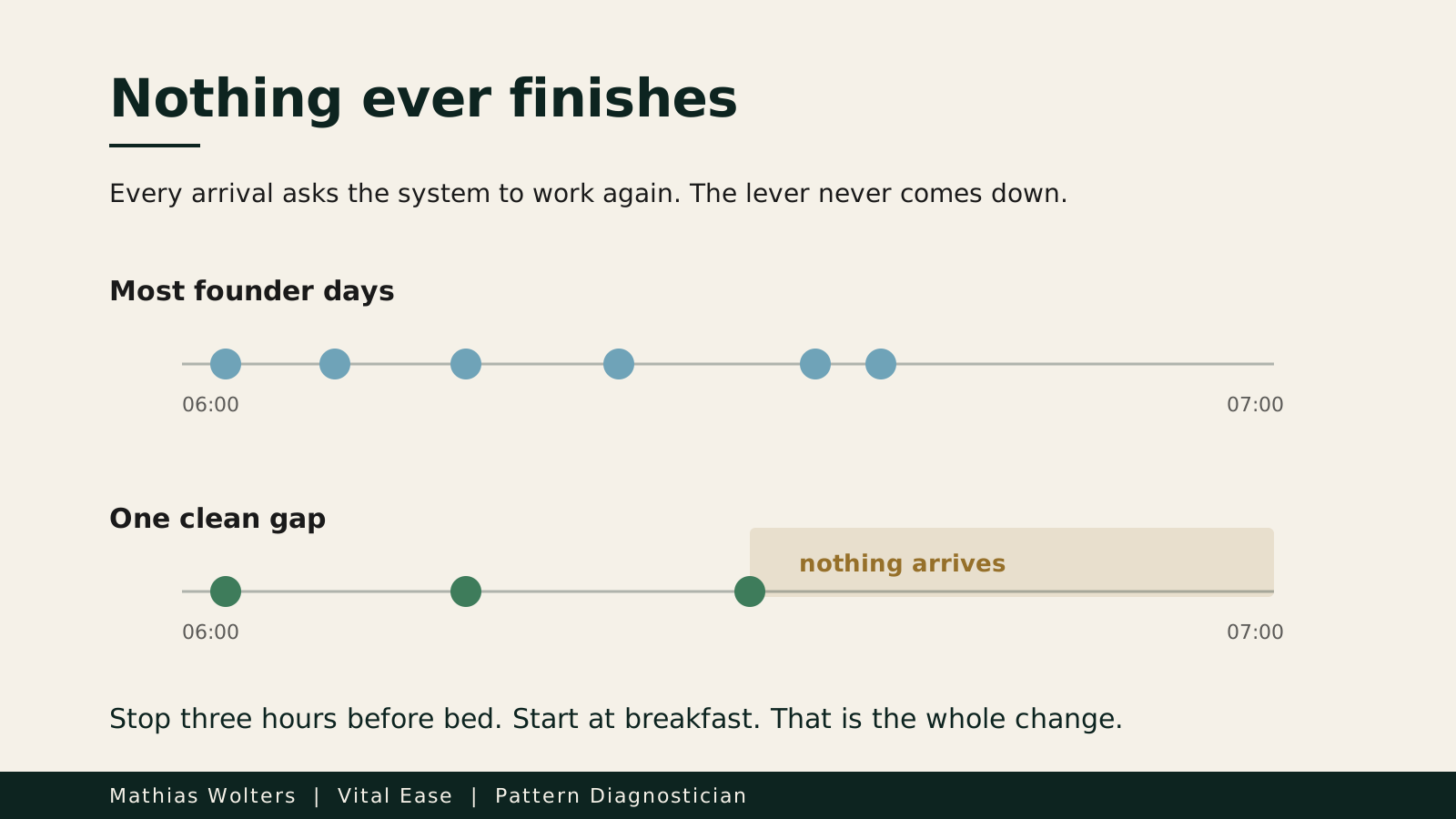
Pick a clean gap. The easiest one to take is the evening.
Stop eating three hours before bed and do not start again until proper breakfast. No heroics, no twenty hour fast, nothing that makes you cold and shaky. Just an actual gap where nothing arrives.
Walk after you eat.
Ten to fifteen minutes, within about half an hour of finishing. Not brisk. Walking pace.
Working muscle pulls sugar out of the blood without needing insulin to do the asking. So a short walk after a meal takes the load off the lever at exactly the moment the load is highest. The timing is the whole thing. The same walk three hours later is a nice walk and does almost nothing for this.
This is the highest return input on the list for the effort involved. It is also the one most founders skip because it looks too small to matter.
Stop putting cold on a weak fire.
This one nobody in your feed is writing, and it is the one my patients feel fastest.
How you eat matters, not only what. A cold lunch out of the fridge, a raw salad, a smoothie with ice in it, all of that costs the middle of you warmth and work before a single thing gets transformed. If the fire is already weak, you are asking it to heat the pot before it can cook.
Warm and cooked. Soup, stew, cooked vegetables, warm food in the middle of the day. It sounds like nothing. Watch what happens to the after lunch crash inside a week.
And when you sit down to eat, put the protein and the vegetables in first and the bread or rice after. Same meal, different order, less work for the lever.
Build some muscle to put it in.
Muscle is the storage. A man with more of it has somewhere for the incoming load to go and a system that does not have to push as hard to put it there. Two sessions a week of real resistance work, legs included, does more for this number over a year than any supplement on the market.
When the fire is already down
There is a point where this stops being about habits.
If the transformation itself has weakened, and it has been weak for years, then eating better is you managing a system that no longer works properly rather than restoring one that does. You will feel some improvement and then you will plateau, and you will assume you are not disciplined enough. That is usually not what is happening.
Rebuilding the fire underneath is different work. It means reading how far down it has actually gone, what else has been pulled down with it, and what your reserve can carry while it comes back up. Chinese herbs do this well, prescribed to what is actually there rather than to the complaint, and that is a clinical decision, not a list.
That is the point at which someone should look at the whole picture properly, panel and body together.
Before you close this
Do not turn this into another thing to grind at.
Get the two numbers. Take the evening gap. Walk after dinner this week and leave everything else alone. That is enough to start, and it is more than almost anyone reading this will do.
And understand what you are actually buying, because it is not a better lab result. Insulin quietly sets the terms for the next twenty years. It sits underneath the weight that will not move, the afternoon collapse, the sleep that does not restore, and a long list of things that show up in a man's sixties and get called age.
Metabolic debt accrues silently and it compounds. The interest shows up long before the principal is called. The interest is the three o'clock collapse you have been drinking coffee at for years.
You have far more time to act on this than the annual panel suggests. But only if you look at the number nobody is measuring.
Mathias
P.S. Fasting insulin is one marker. It tells you the system is under load. It does not tell you what else is being pulled down with it, or what your reserve can carry while you fix it.
The Sovereign Biological Audit reads 40 markers across eight biological systems against functional optimums rather than population averages. vitalease.co/the-sovereign-biological-audit